The creative field is moving fast. New tools are reshaping how we work and think. I’m writing this guide to help you navigate this exciting shift.
As someone who works in this space, I’ve seen firsthand how these systems change our process. They allow us to tackle complex projects with fresh eyes. The old manual generative design methods are getting a powerful upgrade.
By blending these advanced tools into your workflow, you can explore ideas that once seemed out of reach. It’s about expanding what’s possible, not replacing your vision. This partnership unlocks a new level of creative potential.
This article is your comprehensive course. My goal is to give you the essential knowledge to not just adapt, but to thrive. You’ll learn how to merge human creativity with machine-driven innovation effectively.
Key Takeaways
- The creative industry is undergoing rapid transformation with new technological tools.
- Advanced systems are fundamentally changing the approach to complex creative projects.
- Integrating these tools can unlock possibilities beyond traditional manual methods.
- This guide serves as a comprehensive resource for mastering this new landscape.
- The focus is on creating a powerful partnership between human creativity and computational power.
- Adapting these skills is becoming essential for modern creative professionals.
- The aim is to provide practical knowledge for thriving in an evolving field.
Introduction to Generative AI Design in Creative Work
For creative professionals, the last few years have introduced a powerful new partner into the studio. This technology isn’t here to replace us. Instead, it augments our natural abilities, helping us work smarter.
What Is Generative AI Design?
At its core, this approach uses intelligent models to explore possibilities. These systems can digest huge amounts of visual information. They then suggest novel generative design ideas and forms we might not have considered on our own.
Thomas W. Malone of MIT Sloan frames it perfectly.
AI complements knowledge workers rather than replacing them.
Thomas W. Malone, MIT Sloan
In practice, it’s a tool to break creative blocks and avoid repetitive patterns.
The Role of AI in Modern Creative Processes
The impact on efficiency is staggering. Take the automotive industry. It can cost $1 billion to design a new car model. Any tool that saves significant time offers a massive competitive edge.
Tools like DesignAID, developed by researchers generative design from MIT, Harvard, and Toyota, prove the point. Designers can generate high-quality concept images in record time. This is far faster than traditional manual sketching methods.
I see learning to use these systems as a mandatory course for staying relevant. By analyzing statistical similarities, they help us create truly unique product concepts for clients. This is the new way of creative work.
Setting Up My Generative AI Design Process
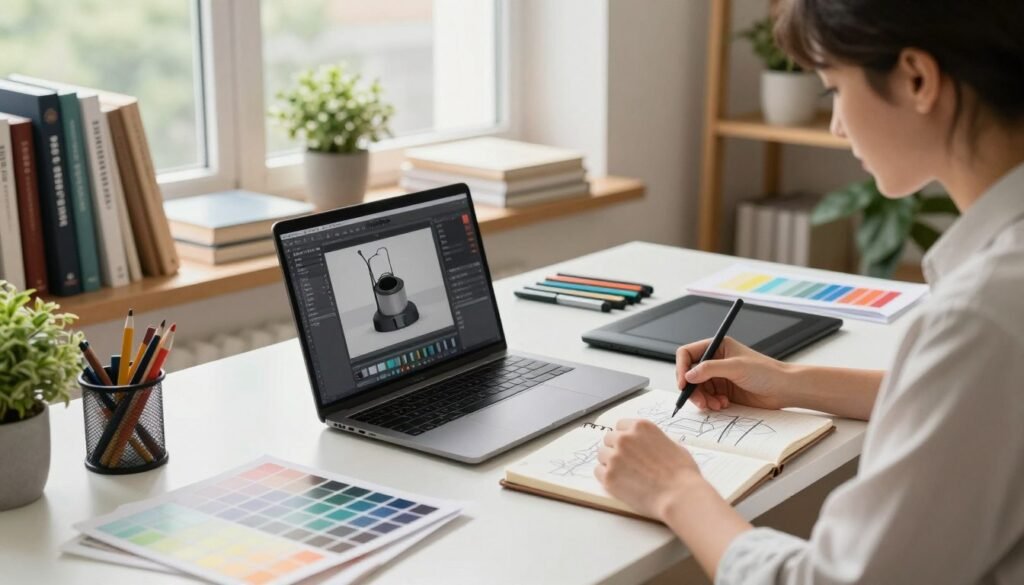
To leverage these advanced systems, I must first build a solid foundation for my creative process. A clear setup turns powerful technology into a reliable partner for my daily work.
Defining Goals and Objectives
I start by outlining specific project parameters. These include target weight, strength needs, and durability requirements.
Clear goals for material usage and performance are critical. This information guides the software to understand my exact vision.
Choosing the Right Software and Tools
Selecting the correct tool is a key decision. I evaluate platforms like Autodesk Fusion 360, Onshape, and Siemens NX.
Each offers unique strengths for different workflows. The right choice generative design depends on my specific project and manufacturing phase.
Building a Supportive Skill Set
My skill set must evolve to support this methodology. I learn how to feed the system the correct data so it can propose optimal product forms.
A major focus is minimizing raw materials waste. Human oversight remains essential to ensure the final designs meet high-quality standards.
By establishing these objectives, my strategy aligns with my organization’s broader creative goals.
Innovative Tools and Approaches in Design
My workflow now hinges on a suite of digital applications that turn rough ideas into polished visuals almost instantly. This shift has fundamentally changed how I explore concepts and present them to clients.
From Preliminary Sketches to Digital Prototypes
I use platforms like MidJourney and DALL-E 3 to transform simple sketches into high-fidelity mock-ups in record time. These tools generate diverse images that help me visualize a product from every angle.
This rapid visualization process allows for quick client feedback. It saves immense time compared to traditional manual methods.
Integrating Advanced Algorithms and Data
The real power comes from integrating sophisticated algorithms. These models process vast datasets to suggest forms and patterns I might not conceive alone.
I can test countless iterations to meet specific client needs. This provides a level of customization that was previously impossible.
| Tool | Primary Strength | Best For | Output Speed |
|---|---|---|---|
| MidJourney | Artistic style generation | Concept art & mood boards | Very Fast |
| DALL-E 3 | Literal prompt interpretation | Product mock-ups & variations | Fast |
| Runway ML | Video & dynamic content | Motion graphics prototypes | Moderate |
This technology helps me break through creative blocks. By combining my professional knowledge with data-driven tools, I unlock new potential. Designers who master this way of working accelerate their entire creative cycle.
Harnessing the Power of Generative AI Design in My Projects
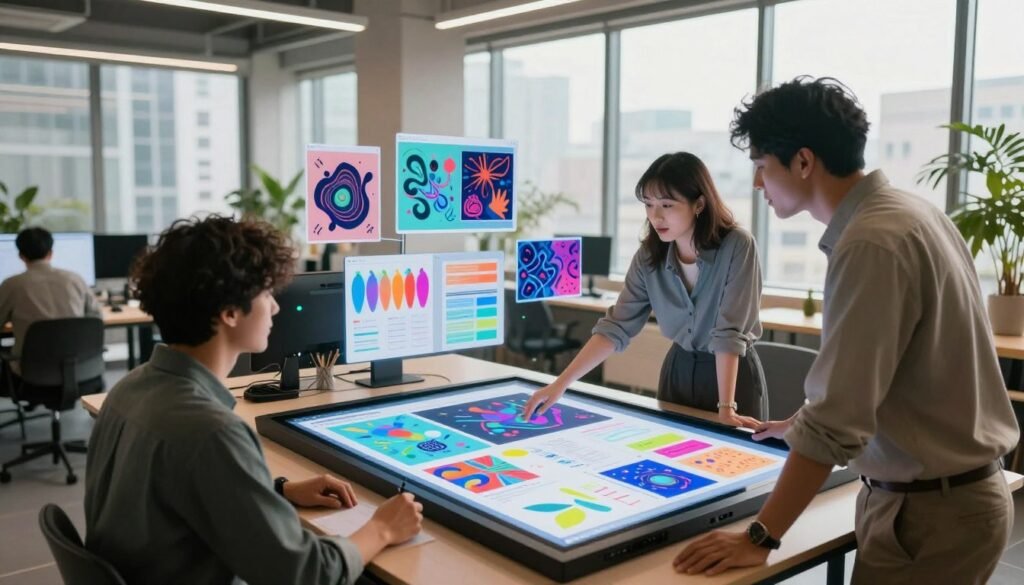
The competitive edge in today’s market isn’t just about talent. It’s about how seamlessly you blend human insight with machine precision. This partnership has become the cornerstone of delivering exceptional value in my studio.
I now see tangible leaps in project quality and speed. This shift requires deep knowledge of both creative principles and algorithmic parameters.
Gaining Competitive Advantages Through Efficiency
Companies like Intellico.ai help creative professionals leverage artificial intelligence. Their models analyze historical data to reuse past designs. This saves significant time and resources in my daily work.
Efficiency gains translate into sustainable generative design practices. Minimizing material waste aligns with broader goals for eco-friendly production.
Enhancing Creativity and Customization
The potential for customization has reached a new level. I can adapt every product to the specific needs of the user with unprecedented precision.
My approach involves training the intelligence on my company’s specific product portfolio. This protects brand identity while fostering innovation.
Real-World Cases and Industry Trends
Real-world cases demonstrate that using these tools to simulate catalog variations helps manufacturers. They test textures and shapes before production, reducing costly physical prototypes.
These innovative tools are changing the way the world views engineering. They make it easier for any designer to achieve complex forms with precision.
| Company/Initiative | Key Advantage | Application Area | Impact Level |
|---|---|---|---|
| Intellico.ai | Efficiency & Sustainability | Engineering & Design | High |
| Autodesk Fusion 360 | Rapid Prototyping | Product Development | Very High |
| Siemens NX | Advanced Simulation | Manufacturing | High |
This technology empowers creative professionals to tackle projects that were once too complex. This process allows designers to focus on high-level ideas rather than manual tasks. The future belongs to those who master this blended workflow.
Conclusion
The journey to master these tools is less about learning software and more about evolving my creative mindset. It’s a transformative process that pushes generative design the boundaries of what I can achieve.
By blending my intuition with computational power, I reach new levels of efficiency in my design process. This synergy makes previously impossible innovations attainable.
I encourage every creative professional to start small. Experiment with new applications and refine your workflow continuously. This is key to staying ahead.
The future lies in this collaborative partnership. Technology acts as a catalyst for my most ambitious ideas.
As these systems evolve, my commitment to learning ensures I remain at the forefront. This is the new standard for creative design.