
Did you know cybercrime could cost the world over $6 trillion by 2023? This scary number shows how big a threat cyber attacks are today. Thanks to AI, we’re seeing new ways to protect ourselves from these dangers.
Cyber threats are everywhere, affecting our personal data and even national security. Artificial intelligence is key in fighting these threats. It brings new tools like predictive abilities and real-time threat alerts to our digital defenses.
Think of a system that can spot dangers before they strike. This isn’t just a dream anymore. Thanks to AI, companies are leading the way in cybersecurity, staying one step ahead of cyber foes.
Key Takeaways
- Cybercrime costs are projected to reach $6 trillion annually by 2023.
- AI capabilities are transforming the landscape of cybersecurity.
- Futuristic security standards leverage AI for predictive threat detection.
- AI provides real-time threat intelligence for enhanced protection.
- The adoption of AI in cybersecurity is setting new industry paradigms.
Introduction to AI in Cybersecurity
In today’s digital world, strong cybersecurity is more important than ever. Cyber threats are getting smarter, so using AI in security is key. This change is huge for keeping data and operations safe.
This part talks about why cybersecurity matters and how AI helps. It also looks at how machine learning brings benefits.
The Growing Importance of Cybersecurity
Cybersecurity is vital for keeping information safe from hackers. With more attacks on people and companies, using the latest tech is essential. AI is a big help here, with its strong defense tools.
AI solutions can spot and fight threats fast. This lowers the risk of getting hacked.
Understanding Artificial Intelligence
AI lets machines do things that humans do, like learning and solving problems. In cybersecurity, AI uses machine learning to get better over time. This helps it find and stop threats before they happen.
AI can look at lots of data and find patterns. It predicts threats well, keeping us safe.
Overview of Cybersecurity Standards
Cybersecurity standards help keep things safe. They are used worldwide, like ISO/IEC 27001 and NIST. These standards guide how to keep security strong.
Adding AI to these standards is a big step. It helps follow rules and fight new threats. Knowing these standards is key for staying safe online.
Historical Context of Cybersecurity Standards
Understanding the history of cybersecurity standards is key to grasping today’s scene. At first, security was simple, with a focus on passwords and basic firewalls. But as threats got smarter, so did our defenses. This shift is a big part of the cyber defense evolution, showing how we moved from simple steps to advanced systems.
Evolution of Cybersecurity Practices
At the start, security was basic. We mainly used passwords and simple encryption to keep things safe. But as threats got more complex, so did our tools to fight them.
The late 1980s saw the arrival of antivirus software, a big step forward. The 2000s brought a focus on network security and systems to detect intrusions. The last decade introduced artificial intelligence and machine learning, leading to better threat detection and response. This journey shows how we’ve kept up with the changing threats.
Impact of Regulations and Policies
Regulations have been key in shaping cybersecurity standards. Laws like GDPR and HIPAA raised the bar for data protection and privacy. These laws pushed for stronger data security, playing a big role in today’s policy-driven cybersecurity.
Important milestones include the Cybersecurity Information Sharing Act (CISA) and the NIST framework. These policies helped create a safer digital world, showing the regulatory impact on security.
The Role of AI in Threat Detection
Artificial Intelligence is key in today’s cybersecurity. It offers strong solutions for finding and stopping threats. AI helps you spot and block cyber threats better than before.
Anomaly Detection and Pattern Recognition
AI works by finding odd patterns in network activity. These patterns might show a security risk. Old methods can’t keep up with new threats, but AI can.
AI finds things that humans might miss. This makes your defenses stronger.
Predictive Analysis for Cyber Threats
AI’s predictive analytics look ahead to possible threats. It uses past data to predict what might happen next. This lets organizations act before an attack happens.
By knowing what threats might come, you can get ready. This makes your cybersecurity stronger and reduces the chance of a breach.
Enhancing Response Mechanisms with AI
In today’s world, cyber threats are always changing. Artificial Intelligence (AI) is making a big difference in how we deal with these threats. AI is changing how companies handle cyber attacks, making them faster and more effective.
Automated Incident Response
Automated security systems are changing the game for incident response. They use AI to quickly find, analyze, and stop threats without needing a human. This fast AI response to cyber incidents helps keep damage low and risk short.
Companies like CrowdStrike and Darktrace are using AI to improve their automated responses. They offer strong solutions that keep up with new threats as they come.
For example, CrowdStrike’s Falcon uses advanced AI to spot and stop suspicious activities. It saves time and lets people focus on harder tasks.
Case Studies of AI in Action
There are many AI case studies in cybersecurity that show AI’s success. IBM’s Watson for Cyber Security is a great example. It uses machine learning to quickly understand and tackle cyber threats.
| Company | AI Tool | Benefits |
|---|---|---|
| CrowdStrike | Falcon | Automated threat isolation, real-time response |
| Darktrace | Enterprise Immune System | Adaptive threat detection, response coordination |
| IBM | Watson for Cyber Security | Speedy threat identification, knowledgeable insights |
These AI case studies in cybersecurity show AI’s power in making responses faster and more effective. As technology gets better, AI will keep improving our digital security against new threats.
Improving Risk Management with AI
AI changes how we deal with risks in organizations. It uses data to give clear views on risks. This helps in better managing risks.
Risk Assessment and Mitigation Strategies
AI is changing risk management. It uses smart algorithms to look at big data and find risks. This helps in quick and smart ways to fix problems.
Using AI in risk management, companies can predict and stop risks early. AI makes risk checks fast and accurate. This helps in making quick decisions.
AI Algorithms for Vulnerability Scanning
Vulnerability scanning with AI is key in today’s security. AI checks systems deeply to find weak spots. This makes sure no part of the network is missed.
AI tools can find small software issues or big security problems. They help make security stronger and more effective.
| Features | Traditional Risk Management | AI-Driven Risk Management |
|---|---|---|
| Data Processing | Manual, time-consuming | Automated, real-time |
| Risk Detection | Reactive | Proactive and predictive |
| Vulnerability Scanning | Basic, periodic | Advanced, continuous |
| Decision Making | Guided by intuition | Guided by data-driven insights |
AI-Powered Security Solutions on the Market
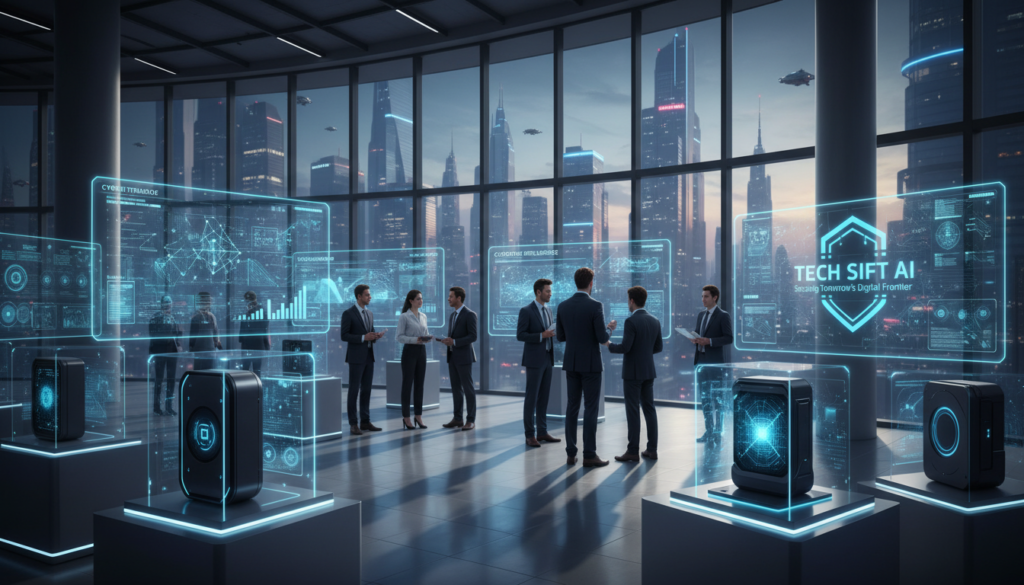
Cyber threats keep getting more complex. This has led to a big growth in AI cybersecurity solutions. We’ll look at the top AI security tools and compare their features and abilities.
Leading AI Cybersecurity Tools
The market is full of new AI security tools. These tools aim to boost your cybersecurity. Here are some of the most notable ones:
- IBM QRadar: Known for its detailed threat intelligence and anomaly detection.
- Palo Alto Networks’ Cortex XDR: Great for incident response and advanced analytics.
- Darktrace: Uses machine learning to spot and act on unusual patterns that might be threats.
- Symantec Endpoint Protection: Provides strong endpoint defense with AI.
Each tool has its own strengths. They offer a range of options for different needs.
Comparison of AI Solutions
When comparing AI cybersecurity products, look at their capabilities, scalability, and impact. Here’s a detailed comparison:
| Tool | Capabilities | Scalability | Impact |
|---|---|---|---|
| IBM QRadar | Threat intelligence, anomaly detection | Scalable to large enterprises | Reduces false positives, enhances threat identification |
| Palo Alto Networks’ Cortex XDR | Incident response, advanced analytics | Highly scalable | Accelerates response times, improves threat mitigation |
| Darktrace | Anomaly detection, behavior monitoring | Scalable for small to large businesses | Identifies threats proactively, adapts to new threats |
| Symantec Endpoint Protection | Endpoint defense, real-time analytics | Ideal for medium to large organizations | Strengthens endpoint security, minimizes breaches |
Ethical Considerations in AI for Cybersecurity
Artificial intelligence is now key in keeping our digital world safe. But, we must think about the ethics involved. We need to balance privacy and security and make sure AI is fair and unbiased.
Balancing Privacy and Security
One big issue is finding the right balance between privacy and security. AI helps catch threats better, but it also gathers a lot of data. This can be a problem for our privacy. We need clear rules and strong laws to protect our privacy while keeping us safe.
Bias in AI Algorithm Decisions
Bias in AI algorithms is another big problem. If AI is trained on biased data, it can make unfair decisions. This could lead to some people being unfairly targeted or ignored. We must use diverse data and keep checking AI to avoid these issues and keep our cybersecurity practices ethical.
Challenges of Implementing AI in Cybersecurity
Adding AI to cybersecurity systems is tough for companies. It’s hard to mix AI with old systems and find skilled workers. Let’s look at these big problems.
Integration Issues with Existing Systems
When trying to add AI to old systems, big problems come up. These systems can’t work well with new AI. This makes finding threats slow and less effective. It’s key to make these systems work together better to use AI’s power.
Cybersecurity Skills Gap
There’s also a big problem with finding people who know AI. More jobs need people who understand AI, but there aren’t enough. Training and learning are important to keep up with new tech.
Future Trends of AI in Cybersecurity
The future of AI in cybersecurity looks bright, with new advancements on the horizon. These changes will bring both opportunities and challenges. As AI grows, it will become more important for keeping our systems safe.
Predictions for AI Advancements
AI in cybersecurity will soon be able to detect threats faster and more accurately. Predictive algorithms will get better at finding problems before they happen. This will help make our security systems stronger.
- Behavioral Analytics: AI will watch how users act and find odd behavior quickly.
- Automated Incident Response: AI will quickly find and fix threats without needing a person.
- Advanced Threat Intelligence: AI will gather and analyze data to stop complex cyber-attacks.
Emerging Technologies to Watch
Cybersecurity is getting a boost from new AI technologies. These changes will change how we protect our systems. Some key technologies to keep an eye on include:
| Technology | Description | Impact |
|---|---|---|
| Quantum Computing | Uses quantum mechanics for super-fast information processing. | Could break current encryption, so we need new security methods. |
| Blockchain Integration | Mixes AI with blockchain for secure, unchangeable data. | Makes data safer and more transparent, reducing tampering risks. |
| Edge AI | Uses AI close to where data is collected for quick analysis. | Reduces delay in responding to threats. |
Keeping up with these new AI trends is key for better cybersecurity. Understanding these advancements will help us create stronger security strategies.
The Importance of Continuous Learning in AI
The world of cyber threats is always changing. This makes continuous AI learning more important than ever. Experts need to keep up with new tech to fight off threats and understand the fast-changing world of cybersecurity.
Ongoing Training for Professionals
It’s key to keep learning in AI to stay safe online. Cybersecurity pros can use many tools to improve their skills. Online courses, certifications, and workshops are great for this.
Platforms like Coursera, edX, and SANS Institute offer these chances. They help you learn more about AI and how it affects cybersecurity.
Staying Updated with Cybersecurity Threats
It’s important to know about the newest cybersecurity trend updates. Reading cybersecurity journals and blogs is a good start. Joining groups like ISACA and (ISC)² also helps.
By following cybersecurity news and going to webinars, you can keep learning. This helps you stay ahead of threats.
Case Studies of AI Transforming Cybersecurity
Artificial intelligence (AI) is changing cybersecurity in big ways. Many companies are using AI to make their security better. These efforts have led to amazing results. They show how AI can improve threat detection and security overall.
Success Stories from Major Corporations
Big names like IBM, Microsoft, and Google are using AI to fight cyber threats. They’ve seen great success in keeping data safe and making security work better. Their stories are inspiring for others to follow.
IBM’s Watson for Cyber Security has been a game-changer, providing real-time analysis of security incidents and significantly reducing response times. Similar to Google’s AI-driven security in Google Cloud, which was key in spotting odd behavior faster and more accurately, boosting security.
Lessons Learned from Implementation
Looking at these success stories teaches us a lot. We learn the value of combining AI with what we already have. It’s also important to train staff well and keep AI up to date with new threats.
| Corporation | AI Solution | Success Metric | Key Lesson |
|---|---|---|---|
| IBM | Watson for Cyber Security | Reduced Response Times | Real-Time Analysis |
| AI-driven Security in Google Cloud | Improved Anomaly Detection | Continuous Model Updates | |
| Microsoft | Azure Sentinel | Enhanced Threat Intelligence | Integration with Existing Systems |
By studying these success stories, your company can learn a lot. You can build a strong and flexible cybersecurity plan. This plan will help protect against today’s threats.
Role of Regulations in AI Cybersecurity Standards
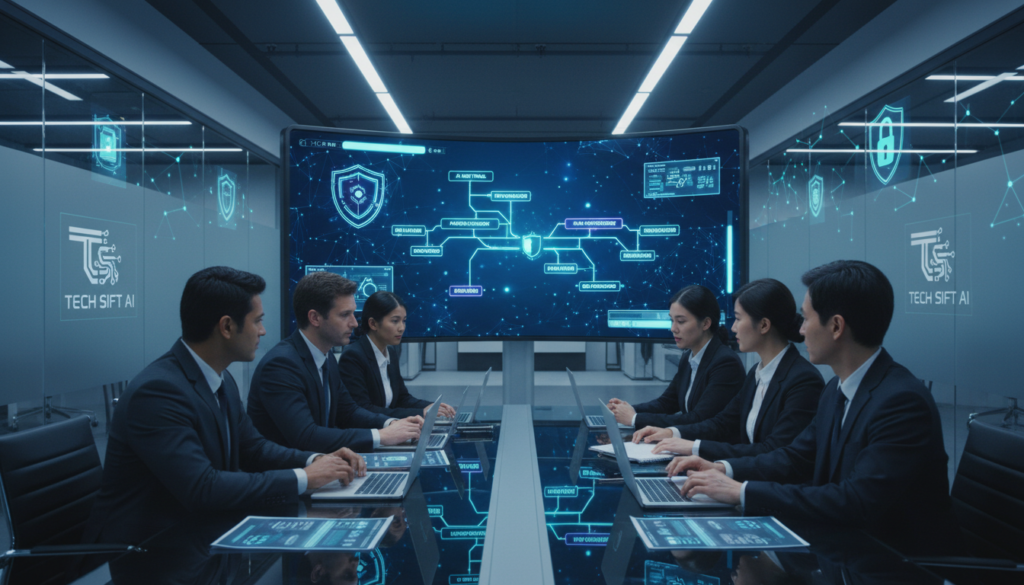
The world of cybersecurity and artificial intelligence is changing fast. As AI plays a bigger role in security, knowing the cybersecurity regulations is key. These rules help ensure AI is used responsibly and protect users and companies from cyber threats.
Overview of Current Cybersecurity Regulations
Many cybersecurity rules affect how AI is used in security. For example, the GDPR in Europe and the CCPA in the U.S. set rules for handling data. These laws make sure AI doesn’t harm user privacy.
Industry-specific rules also matter a lot. HIPAA, for instance, sets standards for protecting medical data. This means AI in healthcare must meet strict standards to keep data safe.
Future Legislation on AI and Cybersecurity
Future laws will tackle AI’s unique challenges. A new AI legal framework is expected to guide the ethical use of AI in security. The “AI in Government Act” in the U.S. Congress is a step towards more rules.
New laws might require companies to be open about their AI decisions. They could also make sure AI systems are fair and unbiased. These changes will help keep security strong and up to date as AI evolves.
Building a Culture of Security Awareness
In today’s fast-changing digital world, keeping your organization safe is key. It starts with making sure everyone knows about AI and how to keep it safe. This knowledge is the first step in building a strong security culture.
Training Employees on AI and Cybersecurity
Good training on AI security is vital. It helps your team spot and stop threats. Make sure your training covers the newest in AI and cybersecurity.
Use online courses, live sessions, and hands-on training. This mix helps your team understand their role in keeping things secure.
Developing a Security-First Mindset
Having a security-first mindset is essential. It starts with leaders leading by example. They should show how security matters in every choice.
Encourage talking about security and celebrate when it’s done right. Also, keep reminding everyone about security rules. This keeps security top of mind every day.
Here are some ways to build a strong security culture:
- Do regular cybersecurity drills and simulations.
- Make it safe to report security concerns without fear.
- Give rewards for those who are very careful with security.
By focusing on security and training, your team will learn to prioritize it. This mindset will help you face the challenges of cybersecurity in the AI age.
| Strategy | Benefits |
|---|---|
| Regular Cybersecurity Drills | Strengthens preparedness and response. |
| Open Reporting Culture | Encourages vigilance and timely issue addressing. |
| Recognition System | Motivates consistent security practices. |
Tech Sift AI: Your Go-To Resource for AI Insights
Welcome to Tech Sift AI, your top spot for AI insights in cybersecurity. We have a lot of info on the newest AI security trends. Plus, we help you get to AI expertise that keeps you ahead in tech.
Latest Developments in AI and Cybersecurity
Tech Sift AI brings you the latest in AI security. Our experts give you in-depth analysis and new trends. This way, you can keep up with AI’s role in cybersecurity and how it can improve your security.
How to Access Our Insights
Getting AI expertise is easy with Tech Sift AI. Just visit our website for articles, reports, and tutorials. Our platform helps you learn or get professional advice. Make sure to check out our resources to strengthen your cybersecurity.
Conclusion: The Future of Cybersecurity with AI
Looking back, AI has changed cybersecurity a lot. It has made threat detection and response better. It has also changed how we manage risks and follow rules, setting the stage for a future with AI at the center.
Recap of AI’s Impact on Standards
AI has brought new tools like anomaly detection and predictive analysis. These tools are key in fighting cyber threats. They help us respond quickly to attacks and find vulnerabilities before they are exploited.
We see a future where AI and cybersecurity work together well. This will make our defenses stronger. AI will keep getting better, helping us stay ahead of cyber threats.
Keep up with AI in cybersecurity through Tech Sift AI. It’s your go-to for the latest AI news in cybersecurity. Check out our resources and get in touch for more information. Let’s move forward together, using AI to protect ourselves and our communities.