My journey into advanced domestic automation began at a major tech event. I watched Elon Musk unveil a bold vision for a humanoid assistant during the 2021 AI Day.
The ambition of the company was clear from the start. They aimed to create a general-purpose machine that could integrate seamlessly into daily life.
Seeing the first functional prototype a year later was a revelation. The progress from concept video to physical machine marked a significant leap in engineering.
This platform represents more than just another product. It is a testament to a future where intelligent machines handle mundane tasks. I believe this technology will redefine our interaction with the domestic environment.
The continuous refinement of the design shows serious commitment. Each public demonstration brings it closer to its ambitious production goals.
Key Takeaways
- The project was first announced by Elon Musk at a 2021 AI Day event.
- The initial prototype showcased a year later demonstrated rapid technological progress.
- The core mission is to develop a general-purpose assistant for everyday environments.
- Personal observation confirms a substantial advance in humanoid machine capabilities.
- Ongoing development is focused on meeting rigorous manufacturing targets.
- This initiative signals a major expansion beyond the company’s traditional automotive focus.
- The potential to alter daily domestic routines is profound and wide-reaching.
Overview of Tesla Optimus Home Robot
From its initial announcement, the development timeline of this advanced machine has captured widespread attention.
History, Development, and My First Encounter
CEO Elon Musk first introduced the concept of the optimus humanoid robot during the 2021 AI Day. This set a high bar for future robotics.
The 2022 AI Day event featured early prototypes that could walk across the stage. It proved the project was moving forward rapidly.
I remember watching the video of the unit dancing and poaching an egg. It highlighted the impressive capabilities of this humanoid robot.
The reveal of the Optimus Gen 2 in December 2023 showed a more refined version. It demonstrated better balance and movement.
Elon Musk’s Vision and the Journey from Prototype to Production
Elon Musk has consistently shared his vision. He stated this platform could eventually be more significant than the vehicle business.
Musk said the goal is to have it in production to handle tasks humans find boring or dangerous. This prediction of a future of abundance drives the team.
The company is working toward a 2026 timeline. It plans to repurpose the Fremont factory for mass production of these units.
Seeing the robot on stage made these ambitious goals feel tangible. The journey from prototype to a viable product is underway.
Design and Key Features
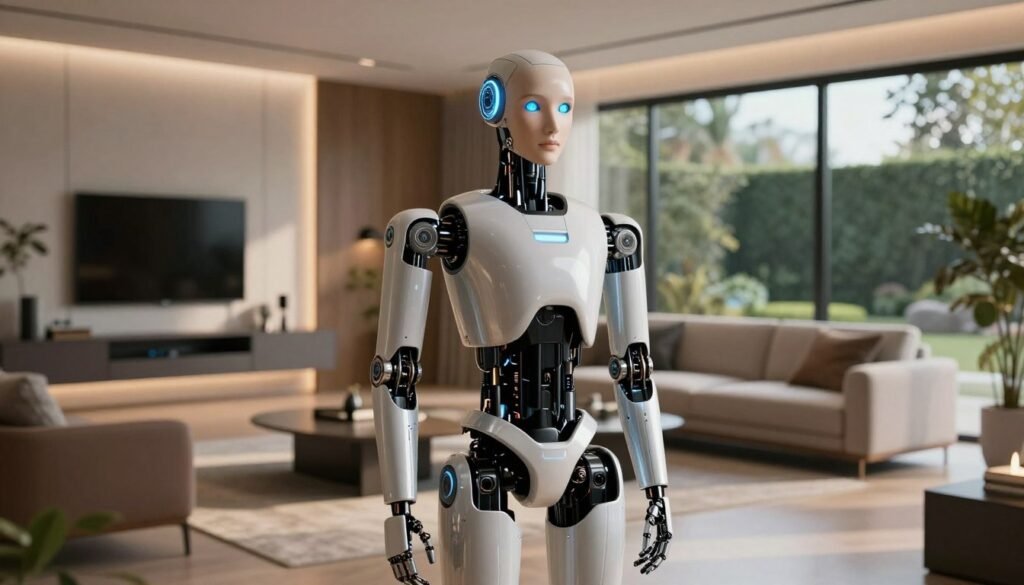
A key aspect of its appeal lies in a form factor engineered specifically for human-centric spaces. The optimus robot from this company is not just another machine; it’s built to coexist. Its design philosophy bridges the gap between advanced robots and daily utility.
Sleek Aesthetics and Humanoid Form
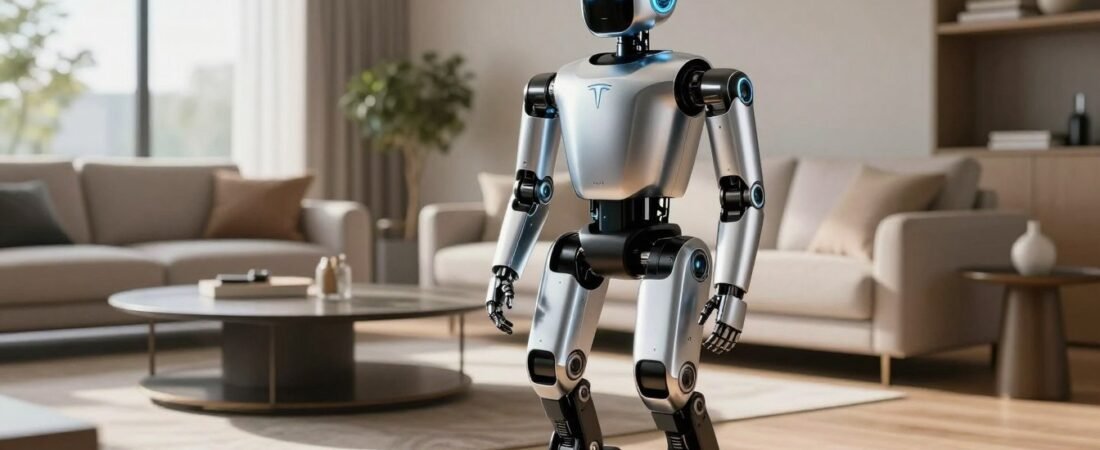
Standing at 5 feet 8 inches and weighing 125 pounds, it has a familiar presence. The build uses a blend of metal and durable plastics. This keeps it light yet structurally sound for dynamic movement.
The sleek, humanoid shape is a functional choice. It allows the unit to navigate rooms, use tools, and open doors built for people. This design is fundamental to its promise of seamless help.
Advanced Capabilities and Degrees of Freedom
True prowess lies in its hands. The latest version, Optimus Gen 2, has 11 degrees freedom. A newer model reportedly doubled that to 22. This allows for incredible precision, like handling fragile items without damage.
Underneath, planetary roller screw technology in the actuators provides strong, fluid force for walking. The AI system is a marvel. It helps the machine locate its own limbs and understand space.
I recall the 2022 day video where an early prototype moved with surprising grace. The tesla optimus robot‘s features show a clear path from concept to capable assistant.
Performance in Real-World Tasks
Moving beyond concept videos, the capabilities of this humanoid machine are now being proven through tangible tasks. Public demonstrations highlight its impressive strength and agile movement in varied settings.
Executing Everyday Chores and Complex Movements
The unit’s physical power is notable. It can deadlift 150 pounds and carry a 45-pound load while walking at five miles per hour. This makes it suitable for logistics work in a factory.
Its dexterity is equally advanced. I’ve seen a video where it sorted objects by color with its hands. It performed delicate corrective adjustments, like repositioning a fallen item.
Balance and navigation are core strengths. The machine can stand on one leg and traverse uneven ground autonomously. Its system can locate its own limbs in space for stability.
Elon Musk has stated the platform is for dangerous or repetitive work. The company aims to use it to address labor shortages. Its shared AI with vehicles allows efficient floor navigation.
This humanoid robot is becoming more autonomous. It learns from its environment to safely interact. The optimus robot represents a major step in practical machine assistance.
User Experience and Hands-On Impressions
The true test of any domestic technology lies not in its specifications, but in the hands-on experience it delivers to people. My direct interaction with the unit at a recent event confirmed its design as an intuitive and friendly assistant.
Ease of Interaction and Safety Considerations
Communication is straightforward through an interactive screen on its face. This feature helps convey information clearly in a living space. The design philosophy prioritizes a natural use case.
Safety is a critical pillar. The company has implemented an immediate stop system to prevent accidents. Physical controls offer users direct oversight.
Some experts have pointed robots out for relying on teleoperation in demos. The potential for full autonomy, however, remains the core goal. This machine robot could learn to operate independently.
Reliability and Adaptability in Home Environments
For daily help, reliability is non-negotiable. A robust 2.3 kilowatt-per-hour battery supports all-day operation. This allows the assistant to manage various chores without frequent pauses.
Elon Musk has a clear vision for this platform to act as a teacher or caregiver. Such roles demand exceptional trust and consistency. Business Insider noted public skepticism alongside excitement regarding this autonomy.
I believe the optimus robot could become a reliable companion. Its success hinges on the continuous evolution of its safety protocols. The humanoid robot must adapt seamlessly to unpredictable domestic settings.
In-Depth Review: Tesla Optimus Home Robot
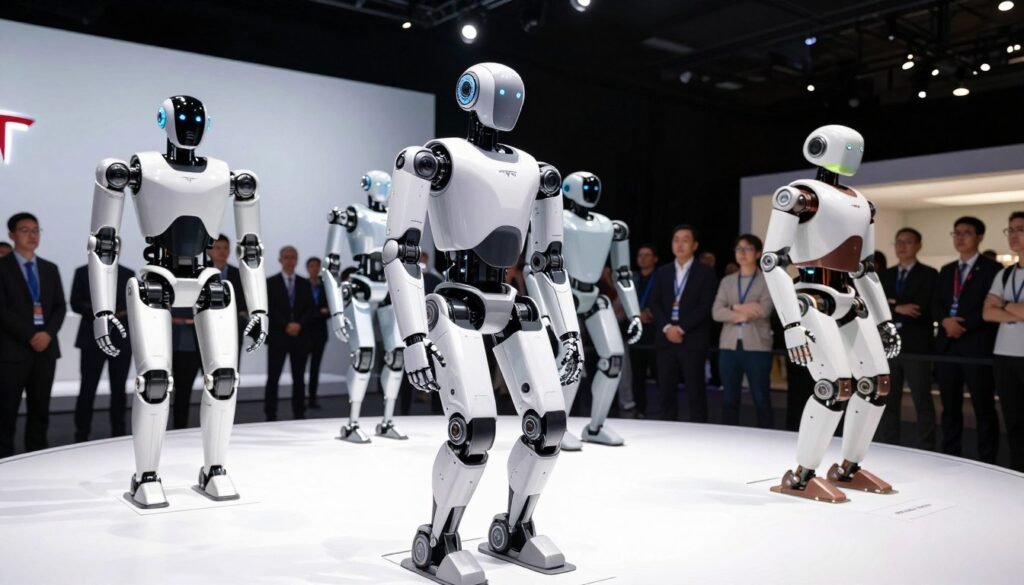
While some view it as a futuristic novelty, its developers describe it as a fundamental transformation for civilization. This in-depth look compares its progress against the field and weighs its potential real-world effect.
Comparative Analysis with Competing Humanoid Robots
The robotics landscape is fierce. Established players like Boston Dynamics showcase machines doing parkour. Some experts, like Rodney Brooks, question the general-purpose viability musk says of such platforms.
Tesla Optimus Home Robot
Seeing the optimus robot on stage, however, shows rapid progress. The Optimus Gen 2, revealed in December 2023, is a more capable prototype. This version addresses earlier critiques head-on.
Public event videos often spark comparisons to sci-fi droids. Yet, the tesla optimus robot is being built for utility, not spectacle. The company is advancing in a short time.musk says
Real-World Impact and Future Potential
The true test is scaling. Production of 5,000 units is targeted for 2025 for internal factory use. This will prove its value handling real tasks.
This will be the biggest product ever.
Musk said it could change how we live and work for years. I think the robot could reach high autonomy. The real-world impact of this optimus humanoid robot hinges on adapting to unpredictable settings.musk optimus
The journey from that 2022 day to a viable tesla robot is clear. This humanoid robot project represents a bold bet on the future of production and daily assistance.
Technological Innovations Driving the Future
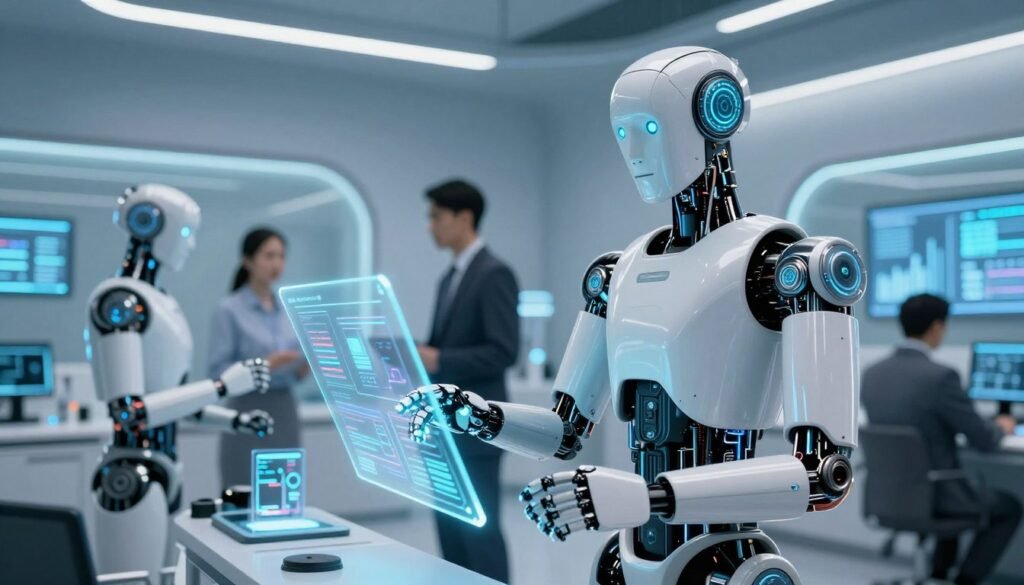
At the heart of its operational prowess lies a neural network capable of continuous learning and environmental adaptation. This is not just incremental improvement; it’s the core technology redefining what machines can do for us.
AI, Sensor Integration, and Autonomous Navigation
The platform’s intelligence stems from a powerful AI chip. This is the same system that guides the company‘s autonomous vehicles. It allows for real-time processing of vast sensory data.
Deep learning and computer vision enable it to navigate complex spaces. The machine can remember room layouts and object placements. This memory improves its efficiency with each use.
Hardware presents its own challenges. Rare earth metals are vital for the strong magnets inside its actuators. Securing a stable supply chain is crucial for future production.
| Innovation Component | Primary Function | Key Advantage |
|---|---|---|
| AI Neural Network | Task Learning & Decision Making | Adapts to new situations without reprogramming |
| Computer Vision System | Environmental Perception & Mapping | Enables safe navigation in dynamic settings |
| Advanced Actuators | Precise Movement & Force Control | Allows for delicate manipulation of objects |
| Fleet Data Integration | Continuous System Training | Improves performance based on real-world experience |
This platform will eventually be able to perform any tasks a human can.
Elon Musk said
Experts in robotics agree this integration of AI and sensors sets new humanoid robots apart. CEO Elon Musk emphasizes that software updates will drive constant evolution. The goal is a truly general-purpose machine.
Conclusion
As development accelerates, the potential for this platform to integrate into daily life becomes increasingly tangible. This optimus robot represents a bold vision for the future of assistance.
While significant challenges remain, the progress demonstrated by the company in a short amount of time is undeniable. From its debut at a major event to advanced prototypes, the journey over just a few years has been swift.
Elon Musk continues to push the boundaries of robotics. His ambitious target for mass production underscores the project’s serious scale.
I believe this product will eventually become an essential part of our routines. The future of humanoid robots is bright, with this robot at the forefront.
Looking ahead, the impact of such advanced machines on society will be profound and long-lasting. We are witnessing the dawn of a new era in automation.