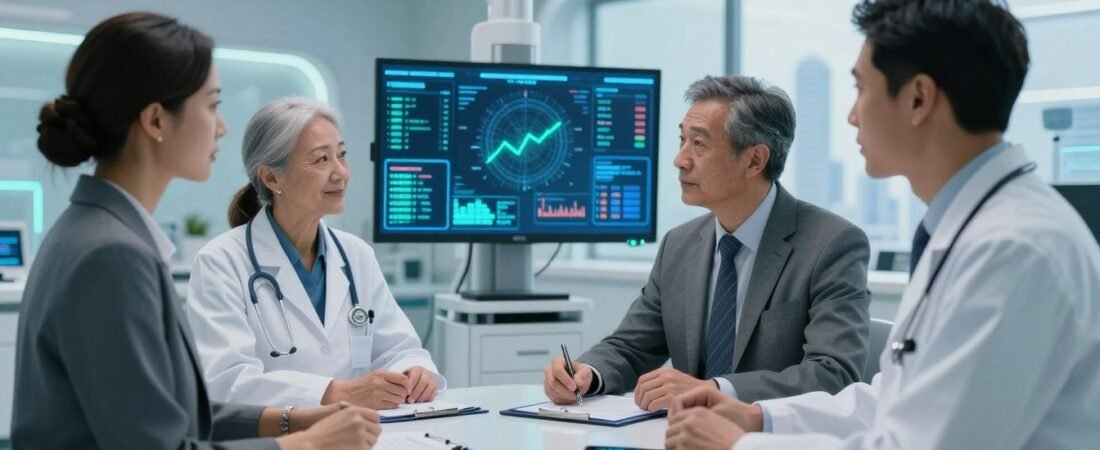
In my professional research, I examine a profound shift in how we identify and understand illness. The diagnostic process is being reshaped by new forms of digital intelligence. My work connects with leading experts like Luciana D’Adderio, who studies these changes in clinical pathways.
This article provides an overview of how clinicians are integrating advanced tools into their daily workflow. As David W. Bates’s research into digital health systems shows, a robust support system can enhance human expertise. I focus on how this partnership aims to improve patient outcomes.
The current landscape of medicine is evolving rapidly. I aim to offer an objective look at the challenges and opportunities this presents for overall health. This is not about replacing human judgment but strategically augmenting it.
Key Takeaways
- The methods for identifying patient conditions are undergoing significant change.
- Clinicians are adapting their routines to include powerful new digital tools.
- Effective integration of technology can create a stronger support system for decisions.
- Research from institutions like the University of Edinburgh and Harvard informs this evolution.
- This article explores both the potential benefits and the practical hurdles.
- The goal is to improve care by combining human experience with algorithmic precision.
- Understanding this shift is crucial for the future of effective patient care.
The Transformative Role of AI in Modern Diagnosis
A quiet revolution is reshaping the foundational steps doctors take to understand a patient’s ailment. The traditional diagnostic process often relies on a physician’s intuition, built from gathered data. As Dr. Robert Wachter of UCSF notes, this delivery of healthcare is being transformed.
Integrating AI with Traditional Clinical Practices
I see this shift daily. Physicians are weaving new digital tools into their standard workflow. This integration provides a continuous stream of vital information.
AI Medical Diagnosis
It refines the clinical decision-making process. The goal is a stronger, more responsive health system. Clinicians gain support without losing their essential judgment.
Rapid, Accurate Decision-Making in Critical Situations
This synergy proves most vital in high-stakes environments. The augmented pathway allows for dynamic patient management. It enables faster, more informed choices when time is critical.
The quality of care improves as a result. While the current system has flaws, this evolution offers a necessary path forward for better treatment outcomes and overall patient health.
AI Medical Diagnosis: Advancements and Innovations
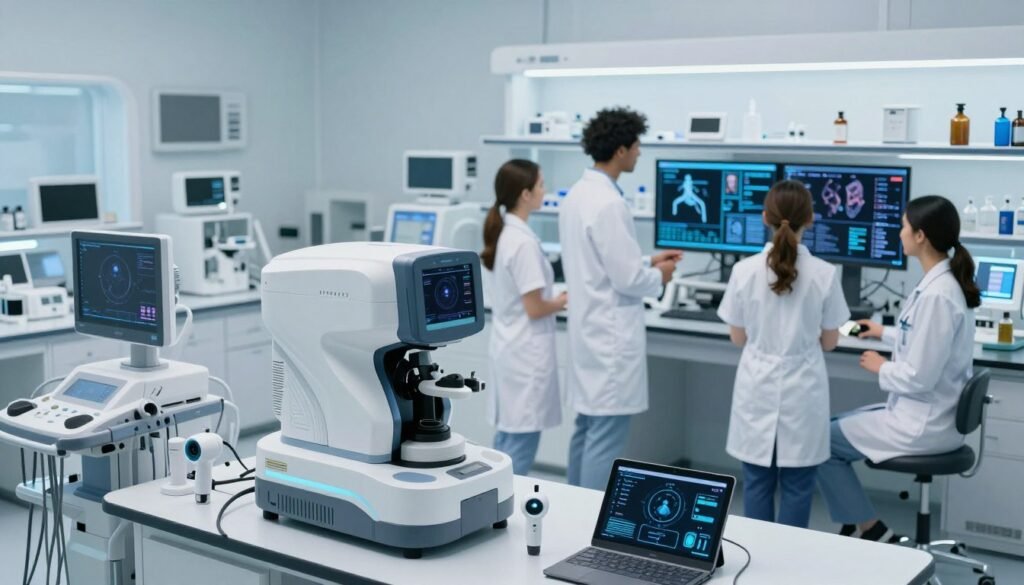
The synergy between data science and clinical expertise is producing tools that redefine diagnostic protocols. This evolution moves beyond simple automation. It creates a new layer of support for doctors.
Machine Learning and Deep Learning Techniques
These advanced algorithms learn from vast clinical data. They uncover patterns human eyes might miss. This intelligence provides a deeper layer of information for the diagnostic process.
My research shows these techniques are not just theoretical. They are actively gaining insights to support physicians. This forms the core of modern computational medicine.
Case Study: AI in Stroke Diagnostics
Consider stroke care, where every minute counts. Tools can now send critical brain images directly to a specialist’s phone. This allows for rapid review and decision-making.
I’ve studied systems that process these complex images in real-time. They identify blockages, creating 3D models for clinicians. This dramatically accelerates the treatment referral process.
Enhancing Diagnostic Speed and Accuracy
The ultimate goal is better patient health. Speed is useless without precision. Deep learning provides evidence that helps validate a doctor’s initial hypothesis.
Yet, the entire process requires expert oversight. Clinicians use these tools to inform, not replace, their judgment. This partnership is the true advancement, leading to more accurate and timely care.
Real-World Impact and Clinical Case Studies
Examining specific cases offers a clear window into the practical benefits of advanced computational support. The evidence from frontline hospitals is where theory meets reality.
My research focuses on tangible outcomes for people and the health system. These stories show how new tools integrate into existing workflows.
Lessons from UK Stroke Hubs
A five-year study at three major UK stroke hubs provided critical insights. I analyzed how leading-edge applications changed the door-to-treatment pathway.
The intervention fundamentally accelerated care for stroke patients. Clinicians received processed brain images in real-time. This allowed for faster, more informed decisions.
The entire process saw a significant reduction in critical delays. Patient outcomes improved because treatment began sooner. This is a powerful lesson in systemic change.
Patient Narratives and AI-Driven Interventions
Individual stories also reveal profound impact. Consultant Bethany Crystal noticed red spots on her legs.
She used a conversational tool to supplement her health information. It advised immediate emergency care.
Doctors later diagnosed her with a rare condition. This case demonstrates how patient-led use can lead to earlier detection.
I observe expert physicians developing new methods to verify algorithmic evidence. They ensure the diagnostic process remains rigorous and trustworthy.
The collective evidence suggests artificial intelligence is a vital tool for complex care in modern medicine.
Ethical Considerations and Clinical Oversight

A primary focus of my work is navigating the delicate balance between innovative support systems and the timeless principles of medical ethics.
This new layer of digital intelligence offers powerful aid, but it also introduces profound questions for the entire care process.
Balancing Automation with Human Expertise
As a diagnostician, I believe human oversight is non-negotiable. We must prevent automation bias, where clinicians might over-rely on algorithmic suggestions.
Research in The New England Journal of Medicine shows large language models can match human diagnostic reasoning. Yet, they are not a replacement for an expert’s nuanced judgment.
Dr. Robert Wachter warns these tools can give misleading advice, like suggesting wrong cancer treatment. The final decision must always rest with the physician.
Managing Data Privacy and Algorithmic Bias
Patient privacy is paramount. We must manage how people interact with these systems. Their personal health information and test results require stringent protection.
Algorithmic bias is a significant concern in my analysis. If the training data is flawed, it can lead to unequal care for different patient conditions.
Ongoing monitoring by doctors is essential to ensure fairness. This vigilance safeguards the trust patients place in the health system.
Practical Applications and the Future of AI in Healthcare
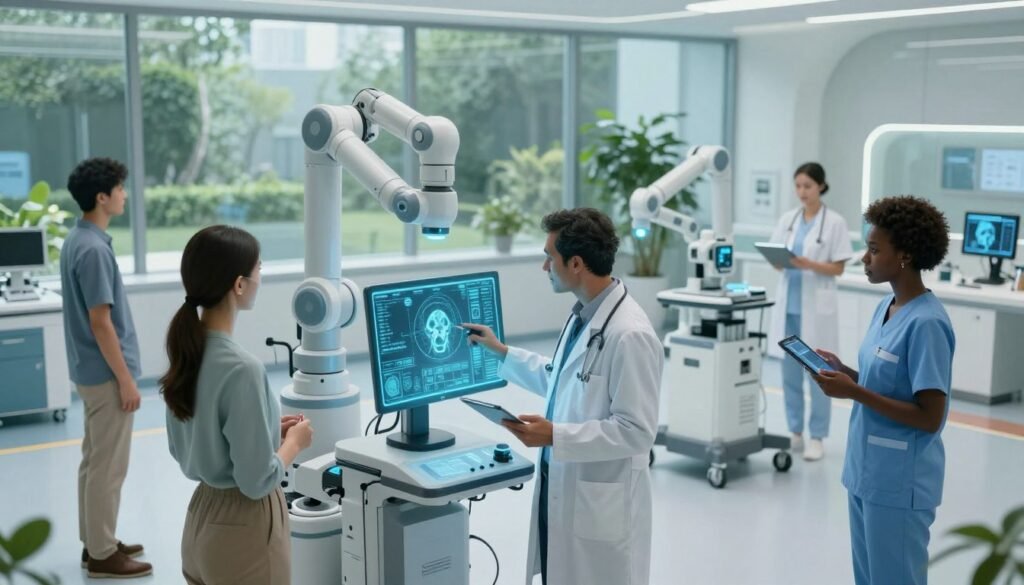
From colonoscopy suites to chronic care management, intelligent systems are proving their worth. This section explores real-world uses and the exciting road ahead for clinicians and patients.
Implementation in Gastroenterology and Other Specialties
Tools are making a direct impact in specialties like gastroenterology. Dr. Omar Khokhar piloted the GI Genius module.
This deep learning tool boosts adenoma detection rates by 14% during colonoscopies. It helps doctors find precancerous polyps, preventing colorectal cancer.
| Aspect | Traditional Method | AI-Enhanced Method |
|---|---|---|
| Adenoma Detection Rate | Baseline | +14% |
| Polyp Miss Rate | Higher | Reduced |
| Procedure Time | Standard | Similar |
| Support for Clinician | Visual alone | Real-time alerts |
Integrating AI with Clinical Decision Support Systems
These tools work best inside a clinical decision support system. My research shows this integration manages complex conditions better.
Patient Burt Rosen uses one to track symptoms for two cancers. It turns his doctor appointments into effective action-planning sessions.
This gives physicians better information for treatment choices. It supports their decision-making for long-term health.
Exploring Future Opportunities for Improved Patient Care
As a diagnostician, I see a clear future path. Artificial intelligence will handle high-volume screening tasks.
This frees physicians to spend more time england journal medicine on difficult cases. The ongoing research confirms these tools are a core part of the care team.
The goal is always better outcomes for every patient. Intelligent support makes this possible.
Conclusion
Ultimately, the fusion of human skill and computational power is redefining standards of care. This article has detailed that profound shift.
As an expert in this field, I see that successful integration demands health care changes in clinical practice. We must build systems where technology supports, but never replaces, professional judgment. Patient safety and ethical rigor are the non-negotiable foundation.
The future of health will be built on this partnership. I hope this england journal medicine resource provides clarity on the ongoing evolution of diagnosis. The thoughtful san francisco use o f AI is key to better outcomes for all.medical school